Location matters: enhancing credit risk models with ML/AI socioeconomic insights

Learn how our alt data can benefit you!

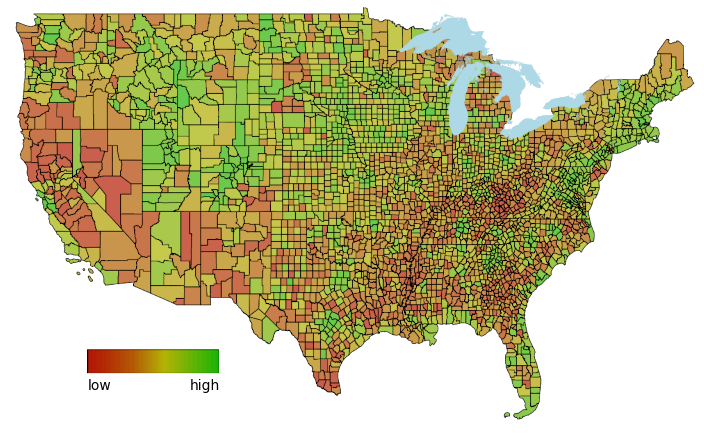
Color encoded locality health scores for 2024 for all US counties
Locality Health Scores by US county
lowhigh

Product


Locality Health Score (LHS)

At SiteData.io we leverage the power of machine learning and socioeconomic data to provide unique, actionable insights into the credit health of localities across the U.S. Our Locality Health Score (LHS) feature empowers credit professionals to make data-driven decisions, optimizing loan portfolios and maximizing returns.

We market historical and current LHS scores for over 60,000 U.S. cities and neighborhoods. These scores were generated by our proprietary ML/AI models fine tuned to optimally mirror the expected principal recovery percentage of loans issued in localities with widely varying socioeconomic conditions.

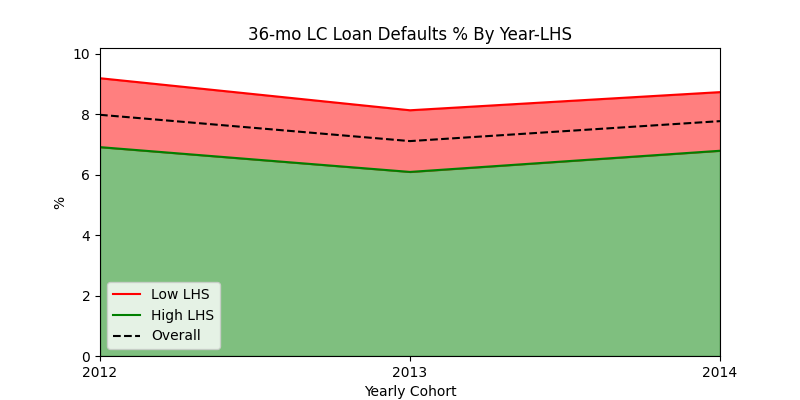
LHS can be utilized in credit risk models to optimize the interest rates of consumer loans in order to regularize expected return. Principal loss (unpaid principal) on high scoring LHS loans can be 30% less than on low LHS loans. On a $1B loan portfolio reducing loss by 1% yields an extra $10M. That is the magnitude of difference our predictors can provide, and we have the data analysis to back that up. Optionally, LHS can help in selecting which loans to include in an optimized portfolio.

Outside of the credit space, here are some other areas where LHS could be of use:

Note: Our models do not include any featurization for: geographic location (like "city" or "state"), race, color, religion, national origin, sex, marital status, or age. 1

Roadmap


What we offer, and what's ahead

Let's begin with what we have to offer... We have a database containing over 60,000 cities, neighborhoods and counties with socioeconomic data harvested from many sources. We've used this data to build machine learning models to forecast expected percent of loan principal to be repaid derived from the (featurized) socioeconomic data, rescaled into a 0 to 1 Locality Health Score (LHS) feature, for ease-of-use and model dimensionality reduction.

Here are other data products under consideration. Please let us know what interests you!

Blog


From our research

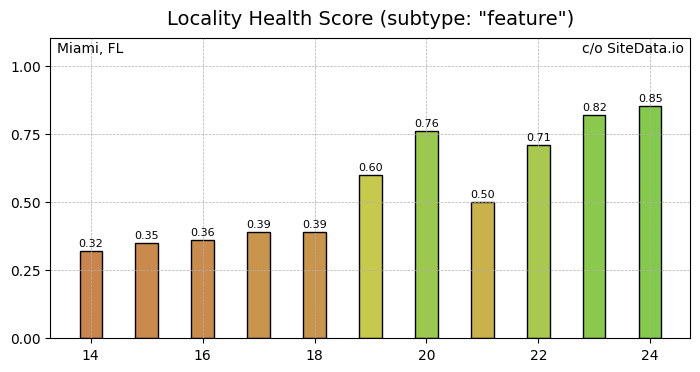
Miami LHS trendline

The Tale of Two Cities: Miami and Corpus Christi

A city's LHS over time indicates if the condition of the city is stable, improving or deteriorating. So in addition to its current LHS score, the LHS trendline can be a useful indicator for decision making.

About Us


The story behind LHS

Harlan Seymour, founder of SiteData.io

Hello! I'm Harlan Seymour, founder of SiteData.io.

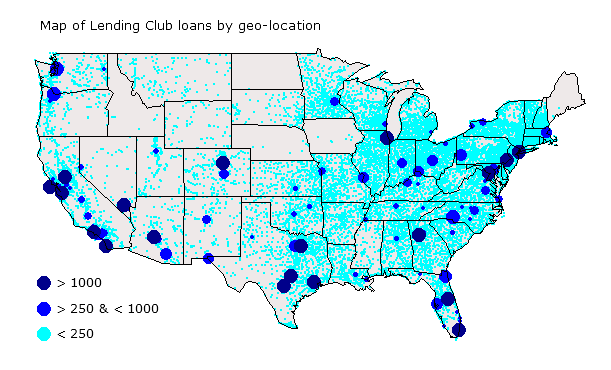
In 2014, I happened upon the peer-to-peer lending space, which was publishing rich data on all of their consumer loans on offer. I love data! So, I went to work studying it to see if I could gain an edge over the baseline performance.

And I did! I found that featurizing the socioeconomic factors of borrowers' cities to create a Locality Health Score (LHS) allowed me to select loans predicted to outperform the mean by at least 1%.

From 2014-2016, I invested almost $1M in consumer loans at Lending Club, and I did indeed achieve about a 1% lift over the baseline return.

Since then, I became fascinated by machine learning and AI, winning a Kaggle AI contest, and, as a founding engineer at Afresh.com, building a large quantile regression ML model to forecast demand for fresh food at thousands of stores. See:

Now in 2026, I have systematized LHS for over 60,000 cities and neighborhoods, using the more powerful modeling techniques available today, creating annual scores for these localities from 2014 to 2026, so now trends over time can be discovered. I believe that using our LHS in credit risk models will significantly improve loan portfolio performance!